


01 Oct A Simple Meditation Practice to Strengthen Peace of Mind: A Guide for Beginners
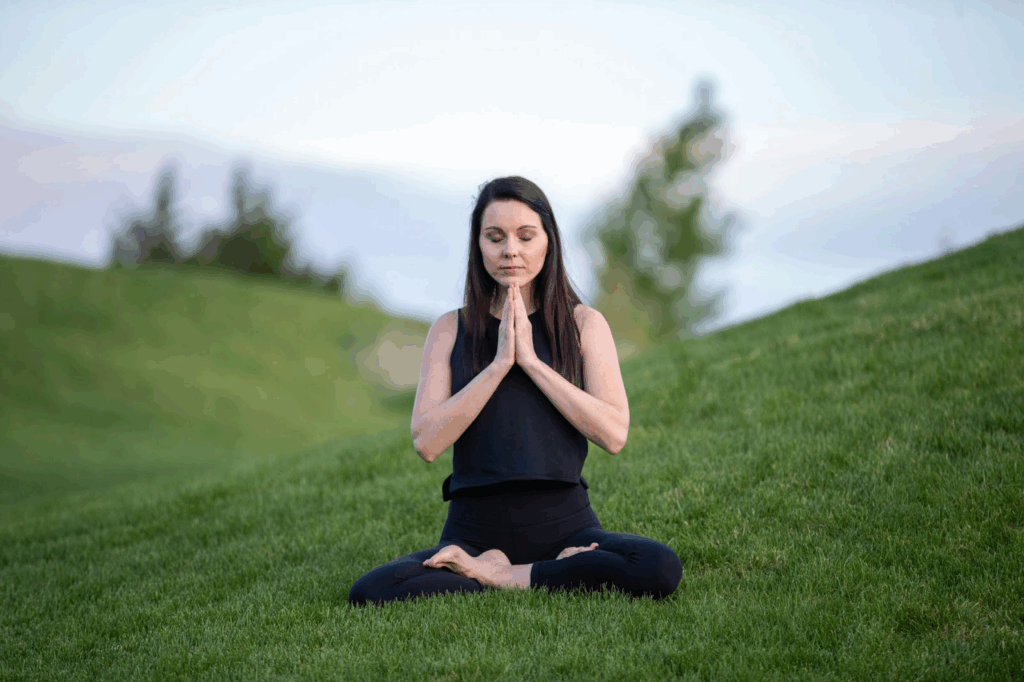
In a world filled with constant noise, notifications, and distractions, finding a moment of genuine inner peace can feel like a monumental task. We are pulled in countless directions by the demands of work, family, and technology, leaving us with a sense of overwhelm and a mind that just won’t quiet down. The good news is that the path to a calmer, more centered mind doesn’t require a grand gesture, a silent retreat, or a complex ritual. It can begin with a simple, accessible meditation practice that can be done anywhere, at any time, to help you recenter and find a moment of peace.
This guide is designed for beginners and will walk you through a straightforward, four-step meditation practice. It’s not about emptying your mind of all thoughts—that’s a common misconception. Instead, it’s about training your mind to be more present, building resilience, and cultivating a deeper sense of clarity and peace in your daily life.
The Power of Meditation: A Scientific Perspective
The benefits of meditation have been extensively researched and are well-documented. Regular practice can:
- Reduce Stress and Anxiety: Meditation lowers levels of the stress hormone cortisol, helping to calm the nervous system and reduce feelings of anxiety and overwhelm.
- Improve Focus and Concentration: By consistently bringing your attention back to a single point of focus, like your breath, you are training your brain to be less distracted.
- Enhance Emotional Regulation: Meditation can help you observe your thoughts and emotions without getting swept away by them, giving you the space to respond thoughtfully rather than react impulsively.
- Increase Self-Awareness: It provides a direct pathway to understanding your own thought patterns and emotional triggers.
- Boost Overall Well-being: A regular practice can lead to a deeper sense of inner peace, compassion, and gratitude.
Your Simple Four-Step Meditation Practice
You can practice this meditation for as little as 5 minutes or as long as 20 minutes. The key is to be consistent, practicing for a short time each day rather than a long time once a week.
1. Find a Sanctuary in Your Seat
Begin by finding a comfortable and quiet place to sit. This could be on a chair, a cushion on the floor, or even on a bench in a park. The important thing is that you feel stable and supported.
- Sit with your spine long, but not rigid. Allow your shoulders to relax down away from your ears.
- Rest your hands gently in your lap or on your knees, palms facing up or down, whatever feels most natural.
- Gently close your eyes or soften your gaze to a single point on the floor in front of you. This helps to minimize visual distractions.
- Take a moment to simply feel the connection between your body and the surface beneath you. Notice the weight of your body pressing down and the feeling of the chair or cushion supporting you. This simple act of grounding can instantly bring a sense of calm.
2. Anchor Your Awareness to the Breath
The breath is a powerful anchor for your attention because it is always with you and always happening in the present moment.
- Without trying to change your breathing in any way, begin to bring your full attention to the sensation of your breath.
- Feel the coolness of the air as it enters your nostrils on the inhale.
- Notice the gentle expansion of your chest and belly as your lungs fill with air.
- Feel the soft release as you exhale, allowing all the air to leave your body.
- You can silently say the words “in” on the inhale and “out” on the exhale to help keep your focus. Alternatively, you can silently count each breath from one to ten, and then start over again.
3. Acknowledge and Release Wandering Thoughts
Your mind will inevitably wander. This is a normal and natural part of the process, not a sign of failure. The purpose of meditation is not to stop thinking, but to become aware of your thoughts without getting lost in them.
- When a thought, a feeling, or a sound arises, simply acknowledge it without judgment.
- Think of the thought as a cloud passing by in the sky, a leaf floating down a stream, or a boat floating by on the water. You see it, but you don’t need to get on board.
- Then, with a gentle and firm intention, guide your attention back to the sensation of your breath. The key word here is “gentle.” Be kind to yourself. Each time you bring your attention back, you are strengthening your muscle of presence.
4. Expand Your Focus to Your Body
After a few minutes of focusing on your breath, you can expand your awareness to include the sensations in your body. This helps you reconnect with the present moment and release tension you might not have been aware of.
- Start by bringing your attention to your feet. Notice the feeling of your feet on the floor.
- Slowly move your awareness up through your body, noticing any sensations in your legs, your hips, your belly, your chest, and your shoulders.
- Notice any warmth, tingling, or stillness. This simple body scan helps you anchor yourself in the present and cultivate a deeper awareness of your physical self.
The Path Forward
Meditation is a practice, not a destination. There will be days when your mind feels calm and focused, and days when it feels like a whirlwind. The key is to show up, be kind to yourself, and remember that even just 5-10 minutes of this practice each day can help you build resilience, reduce stress, and cultivate a deeper, more enduring sense of peace and clarity.