
02 Jun Interview with Brian Hyman: A Journey into Yoga, Recovery, and Healing

LEVITATING MONKEY: Could you share a little bit about your yogic journey? How did you first become interested in yoga and meditation?
Brian Hyman: I first started practicing yoga in New York City nearly 20 years ago. There was a gym in the basement of the building where I lived in an area of Manhattan called Hell’s Kitchen. I went down there to work out one night, as I often did at that time. “Working out” for me meant lifting weights and using machines to get strong and build muscle. It was purely for aesthetic purposes, to stay in shape and to stay fit. But one night, there was a yoga teacher in there at the same time I was there and she was about to start teaching a class. The gym manager asked me if I was going to do yoga, and since the teacher was sitting right there, I said, “Sure, why not,” and I tried it. In that first class, I felt the benefits immediately. I did not know what I was feeling or how to describe it at that time, but something about yoga was different for me yet natural, it felt like home. It felt odd and unfamiliar, but I also felt like I somehow knew what I was doing. I remember lying down at the end of class in the final pose during that class and hearing music that sounded like angels singing. I figured the teacher was playing a song on her sound system. I opened my eyes and looked up and saw that the teacher was actually singing to us. We were being serenaded. It was beautiful. I soon started going each week to that class.
A few years later, I moved to Los Angeles and started taking classes outside at Runyon Canyon in Hollywood. These were donation-based classes where anyone could come and practice outside and be part of the community. I loved these classes and I was very grateful they were there, mostly because I did not have much money at that time, so it was an affordable way for me to do yoga and receive its many benefits, plus I got to be part of a group of likeminded people and not have to feel isolated or alone during that time in my life.
Soon after that, I started practicing yoga at the local gym after I got a monthly membership and yoga was one of the fitness classes on their schedule. I met a teacher there who took me under her wing. She seemed to see more in my practice and in me than I did at that time. She told me that I had an advanced practice and she took time to show me how to do challenging poses after class and she talked with me about philosophy and life. Upon her advice and suggestions, I began to practice yoga at local studios with different teachers and I learned so much about yoga. These are the beginnings of how the true essence and power of yoga entered my life and how I started and maintained a daily practice.
When I realized the benefits of having a regular practice, and how yoga affected all areas of my life off the mat, I knew I had found a way of being in the world and that yoga would not only be a practice but a vocation, a lens through which I could view and interact with the world in a meaningful way, especially when yoga is used to help people in recovery and others who are seeking healing and transformation.
LEVITATING MONKEY: Tell us about your role as a #RecoveryActivist and what yoga has to offer to those in recovery.
Brian Hyman: When I got sober in 2009, yoga was a huge part of my recovery from alcoholism. It helped me quiet my mind, strengthen my body, and connect me to my spirit. I realized that when I am left defenseless in these three areas – mind, body, and spirit – I cannot remain calm or steady or strong.
Yoga fortifies these three main areas where addictions attack. If addiction tries to warp the mind, yoga calms the mind. If addiction tries to destroy the body, yoga detoxes, purifies, and strengthens the body. And if addiction tries to sever our connection to the spirit, yoga reestablishes and solidifies this connection to spirit.
When I practiced yoga in my early recovery, I knew that this would be part of my program, part of my life, and part of my purpose. After I became a teacher, I focused on bringing the things I had learned firsthand about yoga and how it influences recovery to anyone in need, specifically, to people in recovery who either did not know about it or could not get to it. This was the beginning of my becoming an advocate or activist for recovery. I started to teach free classes for people in recovery. I started to write articles about yoga and recovery. I did my best to share what I knew in any way I could. I recorded meditations. I started teaching at treatment centers, sober living houses, and similar places where people need the positive, life-affirming benefits of yoga.
And now, more than 14 years into my recovery and in role as a teacher, my work as an activist has led me to create audio courses and guided meditations for Insight Timer; I have done many interviews about my work for various podcasts; I wrote a book for Shambhala Publications which is being distributed worldwide through Penguin Random House; and I have ultimately tried to do my best to normalize and humanize recovery so that people who are suffering know that they are not alone and that there is a way out, and that they are not broken and there is hope.
LEVITATING MONKEY: You have discussed the need to reduce the stigma surrounding addiction, as harmful stereotypes continue to negatively impact people with addiction (despite substance use disorders being considered a public health crisis). In what ways can each of us individually work to destigmatize addiction and make a difference?
Brian Hyman: Every one of us can do our inner work around suffering, whether we have a personal issue with addiction or not. Every individual can come home to themselves to find compassion for their own shortcomings or faults. Once this type of deep inner work is done, it is easier to identify with someone who is an alcoholic or addict and to see them as someone in need, someone who needs empathy and support, rather than someone who deserves punishment or condemnation. When each human being realizes that addiction is a human problem and we are all humans, we will see those with addictions as people who need help and support because they indeed have a disease, rather than seeing these people as lost or confused or drinking or using drugs by choice.
Addiction is not a choice. It is a mental health issue. It is classified as a disease.
The same way we do not condemn or judge someone who has cancer, we do not tell them to stop having cancer, and we naturally show love and compassion to them when they undergo cancer treatments, we ought to also properly view addiction as a disease that warrants treatment, and we can be compassionate to those who suffer from this potentially fatal affliction.
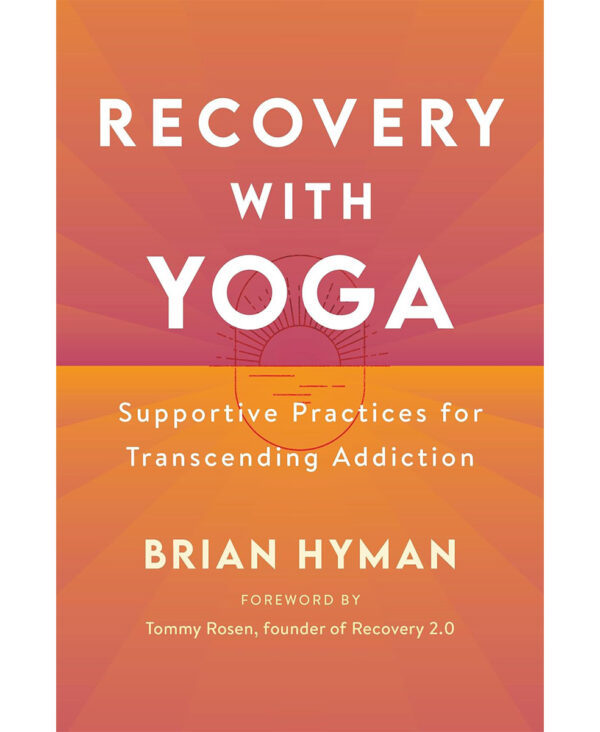
LEVITATING MONKEY: Congratulations on your debut book launch on addiction recovery and yoga, entitled, “Recovery with Yoga: Supportive Practices to Transcend Addiction” (by way of Shambhala Publications). As you mentioned, the book was originally only about recovery, but your editor suggested you include yoga’s influence on recovery as well. How did that affect your writing approach? Was that a challenge to integrate? Or did it come naturally, as that probably better represents the holistic approach you take to the work you are leading as a #RecoveryActivist, no?
Brian Hyman: I am very grateful that my editor at Shambhala (Beth Frankl) suggested we add more yoga philosophy. The book is based on a 30-day audio course I created for Insight Timer: “Recovery: Principles for a Purposeful Life.” Those 30 audio lessons were instructed in a general way so that they could be relatable and accessible to anyone around the world. Those same 30 lesson topics then became the 30 chapters of the book. However, when I added yogic terms, ideas, and practices to the structure and theme of each chapter, this completely deepened the lessons and material, and I was able to add even more exercises and poses, breath work, and meditations, all based on the universal appeal and timeless wisdom inherent to yoga. The writing of the book in this way became a very organic process, where I used the original audio lessons as the foundation for each chapter, then I layered in additional teachings, yogic philosophy, and an essential element of self-inquiry so that at the end of each chapter, readers can reflect on what they read and retain the lesson and they will be able to see how to use the information off the page and out in the world in real-world situations.
LEVITATING MONKEY: Did you have an AHA moment as you were writing the book?
Brian Hyman: Writing simply became a daily spiritual practice of sitting down at my laptop three times a day, in between teaching yoga multiple classes, being a father, doing food shopping, doing laundry, and other aspects of living a modern life. It was a personal study in discipline and tenacity, as well as a loss of ego, pride, and selfishness. It taught me patience and perseverance and that all things take the time they take to manifest and come to fruition.
LEVITATING MONKEY: Tell us about your audio courses on Insight Timer and how folks can subscribe. (“Recovery: Principles for a Purposeful Life,” “Dharma of Recovery: 5 Powers,” “Understanding the Twelve Steps,” “Yogic Principles for Transformation,” Yogic Wisdom for Modern Times“)
Brian Hyman: My courses on Insight Timer are pre-recorded lessons and students can listen at their own pace. Each lesson is 10-15 minutes long and invites students to find stillness and to come home to their inner knowing. I simply do my best to guide them home to themselves, to their inner teacher. I invite them to find their inner guru or inner guidance. My only job as a teacher is to try to point the way so that they can do their own work. I hope that my courses enable people to empower themselves to change, heal, and transform things in their lives that need to be changed, healed, and transformed.
Specifically, my courses are about recovery, yoga philosophy, Buddhist wisdom, the Twelve Steps, gratitude, emotional sobriety, and inner peace.
These are things that work for me and they have worked for my students at gyms, studios, treatment centers, as well as my private clients. And I believe they can work for anyone because my lessons are based on universal and timeless principles. We can all meet at the level of principle and do our inner work there together.
LEVITATING MONKEY: Could you share a bit about your personal daily meditation and mantra practice?
Brian Hyman: I meditate each morning before I start the day. I sit on a cushion in a dedicated spot in my bedroom. I read a spiritual book before I close my eyes, that way I can take in something meaningful, a little tidbit or an inspirational quote for my meditation. Then I close my eyes as I place my hands on my knees. I use the mantra “inhale, present moment,” when I inhale, and I repeat “exhale, wonderful moment” when I exhale. I simply focus on my breath. I sit and do this for maybe five or ten minutes. I do this again many times throughout the day.
Over the years, meditation has become both sitting meditation and a way of being out in the world as a result of sitting. So the way I go grocery shopping is a meditation.
How I pick my daughter up from school is a form of meditation. But these things go together – sitting and being. When I sit, I find peace. And then I use that peace out in the world as a way of being.
LEVITATING MONKEY: As the father of a beautiful daughter, Lilia – how does your yoga practice impact your daily life?
Brian Hyman: I practice poses on the living room floor while my daughter does her arts and crafts projects nearby. We talk sometimes while this is happening. She climbs on my back when I am in certain poses, and we laugh and find the true meaning of yoga, which is union. I am glad she can see that yoga is stretching and breathing and a way to feel and be healthy and that this is normal in our home. We can have fun with child’s pose while drawing with crayons and we can make it relatable and current. I hope that in the future, my daughter will remember this practice and remember that she always had this practice and that we did it together, and I trust that she will be able to return to this practice if she is feeling sad or lonely or angry, and she will have her practice to comfort her, and she will remember that her dad found peace when he did yoga and that he tried to help others do the same thing and that she can use her practice to help others too.

LEVITATING MONKEY: I know that ensuring yoga is accessible and affordable to those in recovery is core to your mission. Could you share why this is important to you? (And any resources folks could turn to for more info)
Brian Hyman: When I first got sober, I did not have much money. I did not have health insurance. So I did not have many options for treatment, therapy, yoga, etc. Those free and donation-based yoga classes that I took around town, at parks, and in community centers, truly saved me. I was able to receive the benefits of yoga in a safe space with teachers who were truly karma yogis and seva yogis. Karma yoga is the yoga of action. Seva is selfless service. To offer teachings to those in need who may not have the material or financial resources is one of the greatest actions one can take on a yogic path. It is like medicine. It is good karma for sure. In many cases, this may be the only source or outlet for people to discover the practice of yoga. Since I experienced this personally, I try to work with companies that make their offerings affordable and accessible. I have taught public sessions with organizations that work along these lines, and I started my own free classes in parks and churches over the years so that people could practice together whether they had money or not, especially people in recovery.
LEVITATING MONKEY: I’ve heard you say that recovery is not just about recovery from drugs, sex alcohol, money – as there are quite a few other reasons one could be in recovery – similar to depression, stress, or going through a divorce – recovery is needed at different stages throughout one’s life. Do you have any practical tips that folks could use/incorporate in their daily lives to help maintain their inner peace/equilibrium?
Brian Hyman: Try to develop and maintain a spiritual practice or discipline. Have a routine. Do the same helpful things each day, preferably at the same times. For example, each morning, try to pray or meditate. Every afternoon, write in your journal. At night, read a spiritual book or practice restorative yoga.
Consistency is an ally on any path to recovery from anything. Being congruent is very helpful. This sets the stage for growth, healing, and transformation.
Also, find a community of like-minded peers. Find people you can trust and talk to and share life with. Twelve-step groups, cancer support groups, divorced parent groups – these gatherings work because everyone is going through something similar together. We find solutions together in community. We find happiness and peace together in community. Things like addiction cannot attack an entire community of people who are aligned in their purpose to remain recovered. Stay connected with those who are also doing the work you are doing – the deep, inner personal transformative work – and you will be stronger as you walk the path together.
LEVITATING MONKEY: How have your personal experiences with the Bhagavad Gita, the Upanishads, Buddhism, Zen philosophy, and Buddhist psychology influenced your perspective on life and recovery?
Brian Hyman: Over the years, I have felt drawn toward certain books, authors and religions and I have been fortunate enough to just follow that call wherever it leads. Regarding eastern philosophy, I was interested in Zen as a teenager and I read a few books from the local library at that time. Other than that, regarding the source texts mentioned, I read and studied these teachings in my early recovery. I found good translations and commentaries and I soaked it all in. I loved how universal the teachings were in these ancient books and still are today. I started to realize that whether Krishna, Jesus or Buddha talked about love, love is love. So it did not really matter to me who said it, since they were all talking about the same thing. And I discovered there were quite a few different ways to approach the same timeless thing, so how wonderful it is to know three ways to find love, for example, rather than just one. So I have drawn upon all of these types of teachings and traditions as a yoga teacher, writer, father, and course creator so that more people from various backgrounds will be able to find an avenue that works for them to learn universal truths and principles inherent to the core of their being.
LEVITATING MONKEY: This last question is one we ask all of our esteemed guests on Levitating Monkey…If you could impart three key life lessons to others on their (spiritual) path, what would they be and why?
Brian Hyman: Ask for help when you need help. Give someone help when they ask for help. This is the law of reciprocity. The law of balance. We are all teachers and we are all students. We take turns leading and following. We lift others up when they fall down. And we allow others to lift us up when we fall.
Remain teachable, humble, with a beginner’s mind. When we think we know everything or our ego is running the show, things get dark and small and challenging rather quickly. Remain open, fluid, flexible, and solutions will appear. Answers cannot come when the doors of perception are shut tight. Share what you know and share your truth. Be generous with your experience, it might just save your life or someone else’s life.
About Brian Hyman
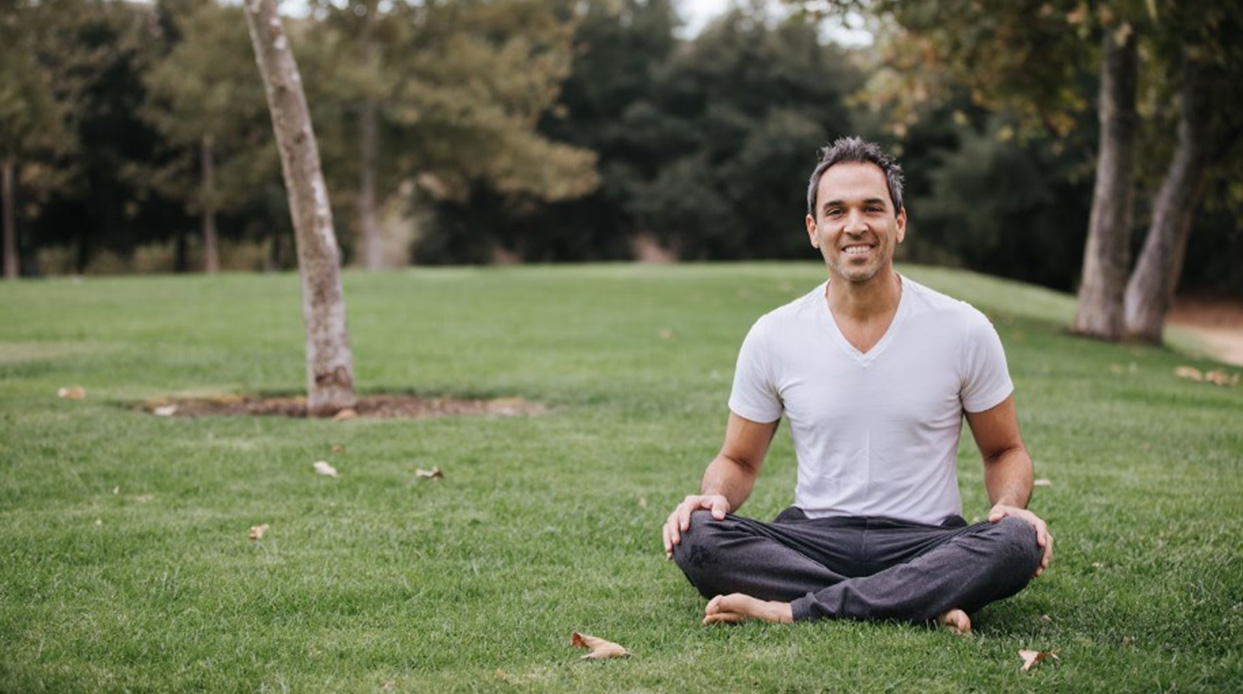
Brian Hyman, RYT, is a yoga and meditation teacher, author, and father. His work with recovery, mindfulness, and holistic wellness combines yogic philosophy, Buddhist psychology, and spirituality. His teachings about healing and transformation have been featured in many publications and podcasts. His book Recovery with Yoga is now available worldwide. Brian has been sober since 2009, and has been teaching at a prominent rehabilitation center since 2012. To learn more about Brian at his website: https://www.brianhymanyoga.com/